Sensing systems that work in the field.
I’m Siamak Tavakoli, Lecturer III in Electrical and Computer Engineering at the University of New Mexico. I build embedded and sensing systems for real environments — tracking wildlife across the high desert, detecting invisible thermal plumes from the air, and teaching AI agents to design verified processor hardware.
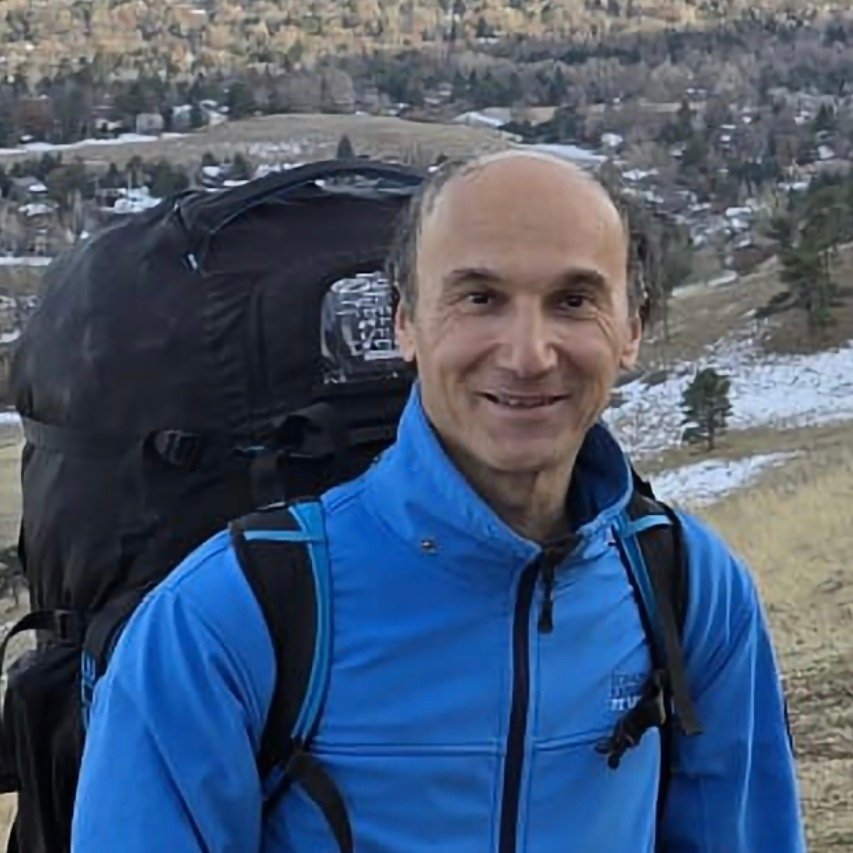
Siamak Tavakoli, PhD, CEng
Lecturer III · IEEE Senior Member · MIET
What I work on
My projects share one thread: getting trustworthy, timely information out of resource-constrained devices operating in messy, real-world conditions.
Thermal & infrared sensing
Airborne detection of weak thermal plumes and updrafts — from evaluating existing sensors to a dedicated thermic-air detector and an infrared camera flown on a paraglider flight deck.
Wildlife tracking & conservation tech
EcoSentinel: low-power tags with cooperative “informant” data exchange, a predictive UAV mobile base station, and RIS-assisted links — developed with the US Fish and Wildlife Service.
AI-assisted hardware design
Agentic, simulation-first methodologies that take LLM-generated HDL from a one-line spec to verified RISC-V processors on FPGAs, including a 64-bit core with an IEEE 754 FPU.
Real-time sensitivity & edge computing
EventTracker, the event-based sensitivity analysis from my doctoral work, extended to networks of smart platforms, edge orchestration and digital twins.
Infrastructure-free indoor positioning
Phone-only geomagnetic fingerprinting that identifies indoor zones without Wi-Fi or BLE beacons, validated across 11 retail stores.
AI-orchestrated manufacturing
A verbal-to-product pipeline: natural-language requirements turned into fabricated and tested electronic devices.
News
- Paper on SPI, I²C and CAN bus in embedded sensor systems accepted at 2026 IEEE RTC.
- Accepted for UNM Rainforest Innovations accelerator funding for the wildlife tracking & environmental monitoring system.
- Provisional patent filed: OmniMod — Autonomous Capability Selection and Reconfiguration for a Modular Robotic System.
- Escalera award (with complementary School of Engineering support) to extend the place-based Acequia Manager model.
- Journal manuscript on building VHDL/Verilog RISC-V processors with Claude Code submitted to ACM TRETS.
- Seven papers submitted to 2027 IEEE conferences (SAS, I2MTC, CCNC-IoTime, ICAIIC, AI4IM).
- Student Experience Project Faculty Fellow; two School of Engineering Innovative Teaching Fellowships (2025).
Engineering with a place
“Local environmental problems give students a concrete purpose for their technical work.”
From New Mexico acequia irrigation in my programming course to wildlife refuges visited with senior design teams, I tie research and teaching to the communities and landscapes around UNM. Students are co-inventors, co-authors and field partners in most of the projects on this site.